Capacity That’s Always Live
Perpetual Capacity Management has never been available in practice management until now.
Traditional capacity planning is done once a year and quickly becomes outdated, whereas Link keeps every team member’s capacity live, updating with every timesheet, task, and change in workload.
Built on a true capacity algorithm, it gives you a continuously accurate view of available hours so you can balance work, protect your team, and meet deadlines with confidence.
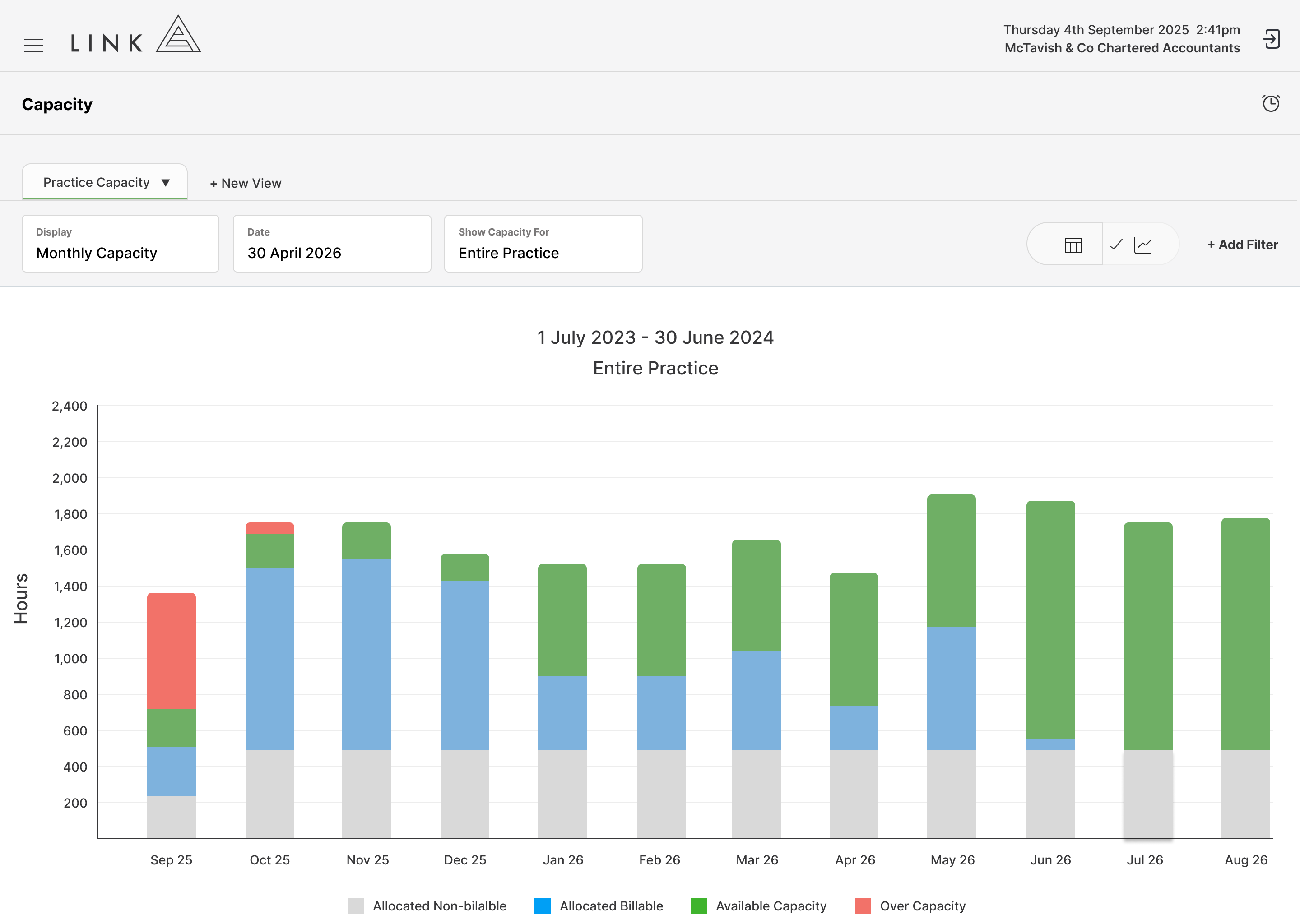
1 What is Perpetual Capacity?
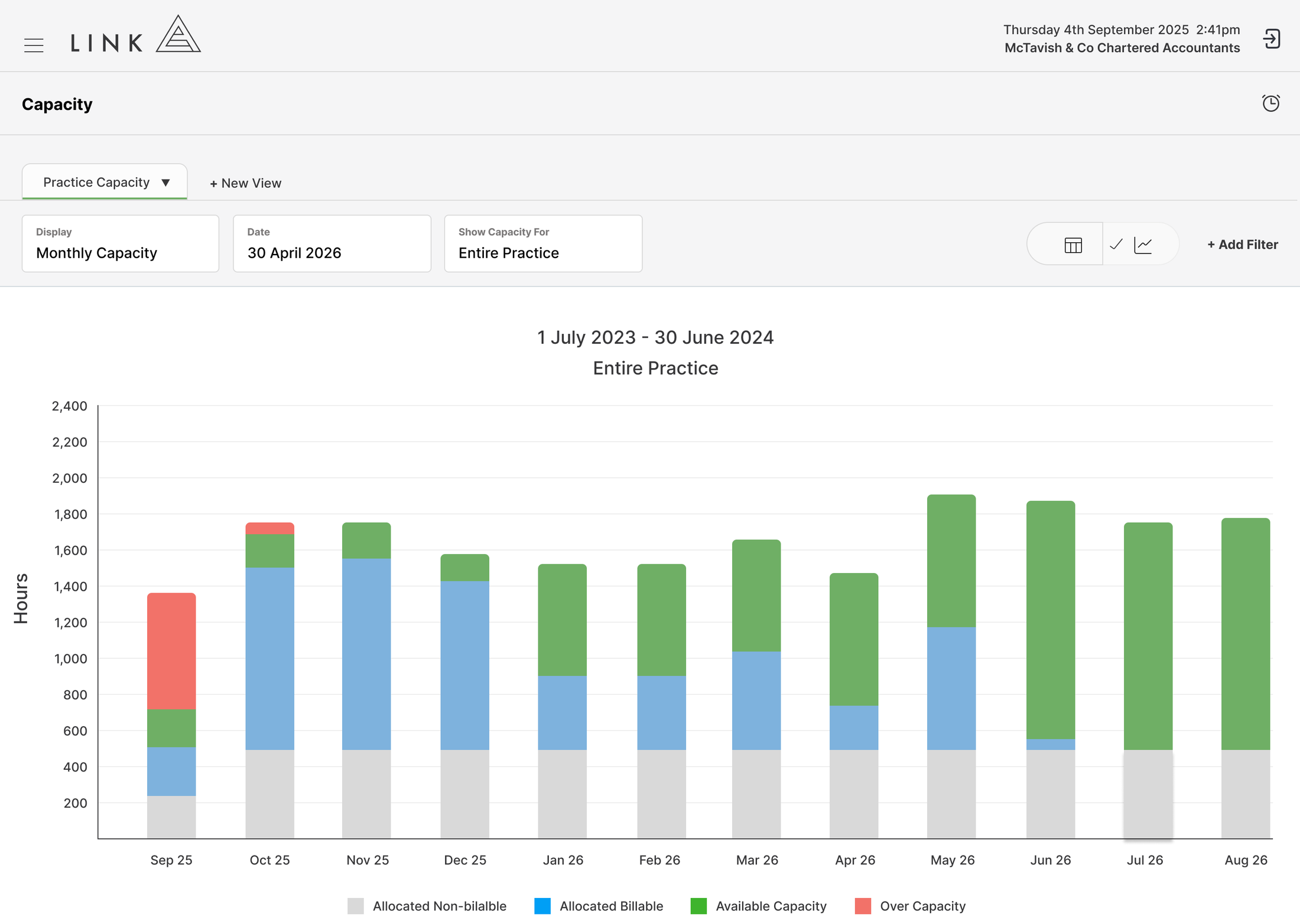
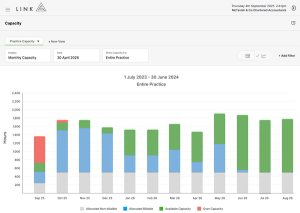
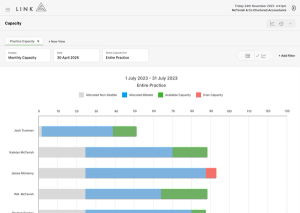
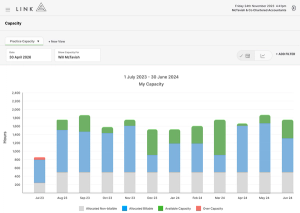
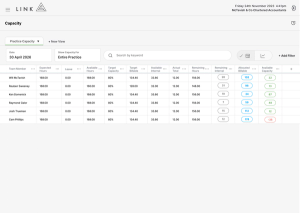
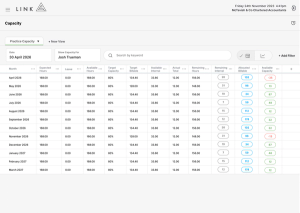
Perpetual Capacity updates with every interaction, keeping capacity continuously live. Every timesheet, allocation, reallocation, and completed task automatically adjusts a person’s available capacity, so you can see in real time how much more work they can take on, or whether they are already over-allocated.
This is different from Periodic Capacity, which is a static plan based on contracted hours, target capacity, and billable rates. While Periodic Capacity shows how much work a firm should be able to handle, it quickly becomes outdated because it does not reflect what is actually happening day to day.
Perpetual Capacity connects the plan to the work itself. As jobs move, tasks change, time is recorded, and work is completed, capacity adjusts with it. This gives firms a living view of workload across the team, making it easier to prevent overload, find spare capacity, understand future pressure points, and make better decisions before deadlines become problems.
Why Choose Link?
Every other practice management app misses the mark on capacity. They rely on static plans or clunky drag-and-drop calendars that need constant upkeep and are out of date almost immediately. This results in capacity being ignored, despite being the most important insight in a firm.
Link changes what it means to manage capacity with Perpetual Capacity. Accountants are in the business of buying and selling capacity, so we’ve made it a byproduct of workflow, not a separate system to maintain. Using the same inputs you already need (who’s doing the work, how long it should take, and when it’s due), Link keeps capacity live and accurate automatically.
No extra effort. No manual upkeep. Just a real-time view you can trust to balance workloads and hit deadlines with confidence.
Looking at another solution?
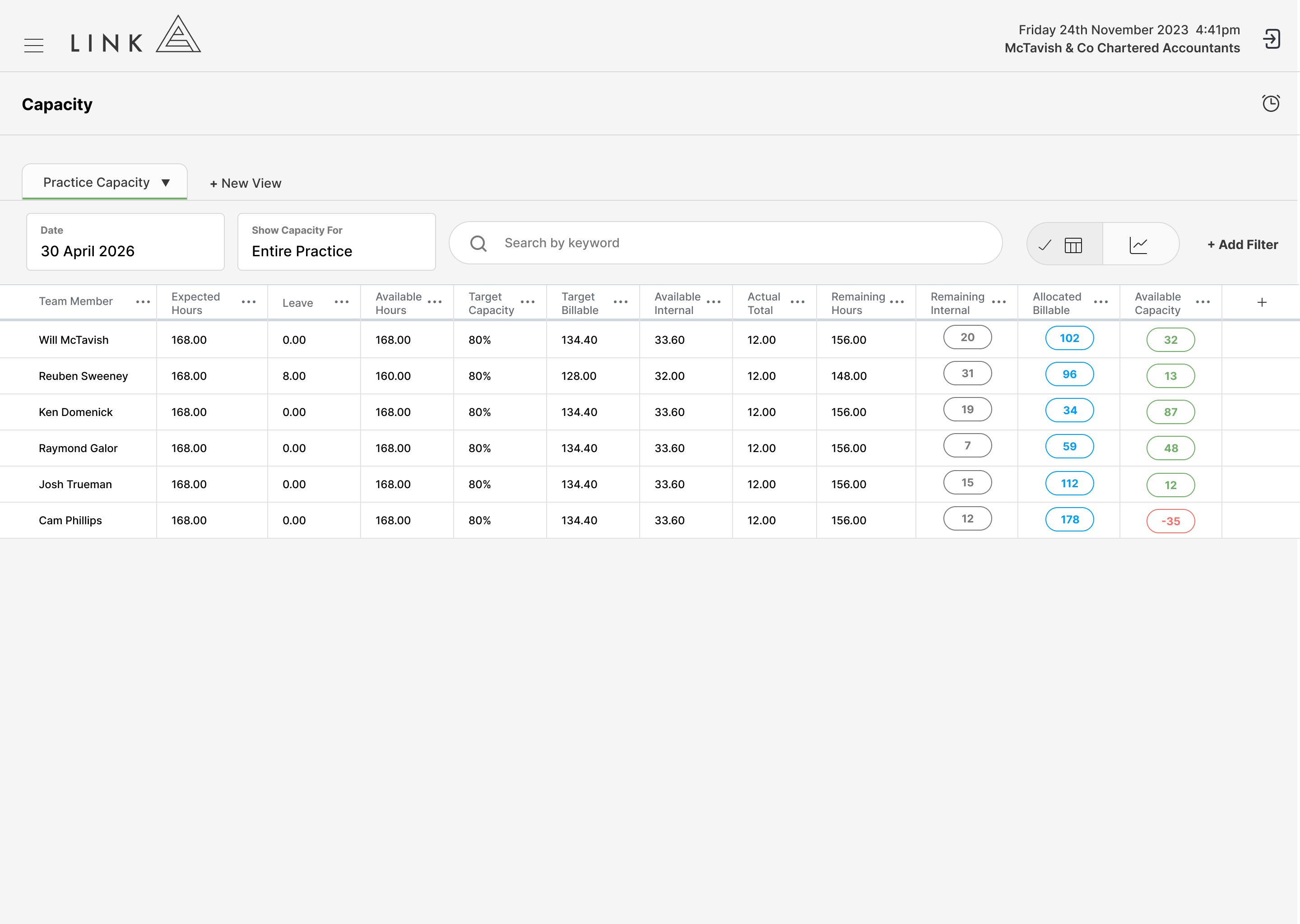
Pump the brakes! Most systems do not have real capacity. They show a static plan of assigned work or a basic workload chart, but because those plans are not live, they are outdated as soon as work changes. Here are five ways to test the accuracy and functionality of any capacity management system.
LINK
Capacity is always live and adjusts with every interaction Tasks completed under budget increase available capacity Task overruns reduce available capacity for the month Leave reduces available capacity relative to target capacity Time added to unallocated tasks reduces available capacity Time added to future tasks adjusts capacity in relevant months
Other Solutions
Capacity is a static report and requires manual updates Tasks completed under budget do not update capacity Task overruns do not update capacity Leave does not update capacity Time added to unallocated tasks does not update capacity Time added to future tasks does not update capacity
Customer Stories
Link simplifies practice management for high-performance accounting firms by not half-solving problems.
Select the customer below to hear their story.
Phoebe Meares, Head of Operations“You can get the visibility you need quickly and make impactful decisions in a fast-paced environment.”

Stephanie Pope, Director“We’d tried multiple other tools, but found them overly complex with too many moving parts. They weren’t particularly intuitive for day-to-day use, so the team didn’t engage with them consistently. As a result, there were gaps in how often we reviewed performance, and we lacked a simple, reliable way to stay on top of key metrics across the business.”

Shona Wallace, Director“We were historically reactive to client work and with the data we were starting to see from Link, we quickly realised that we needed to start being more proactive around planning to become more efficient and ultimately see some dramatic changes in our KPIs.”

Brigette Fulton, Director“Since working with Link, our day-to-day operations are incredibly less stressful.”
See for Yourself
Explore how Link delivers Work in Progress reporting in a live, self-guided demo.