Capacity Driven Workflow
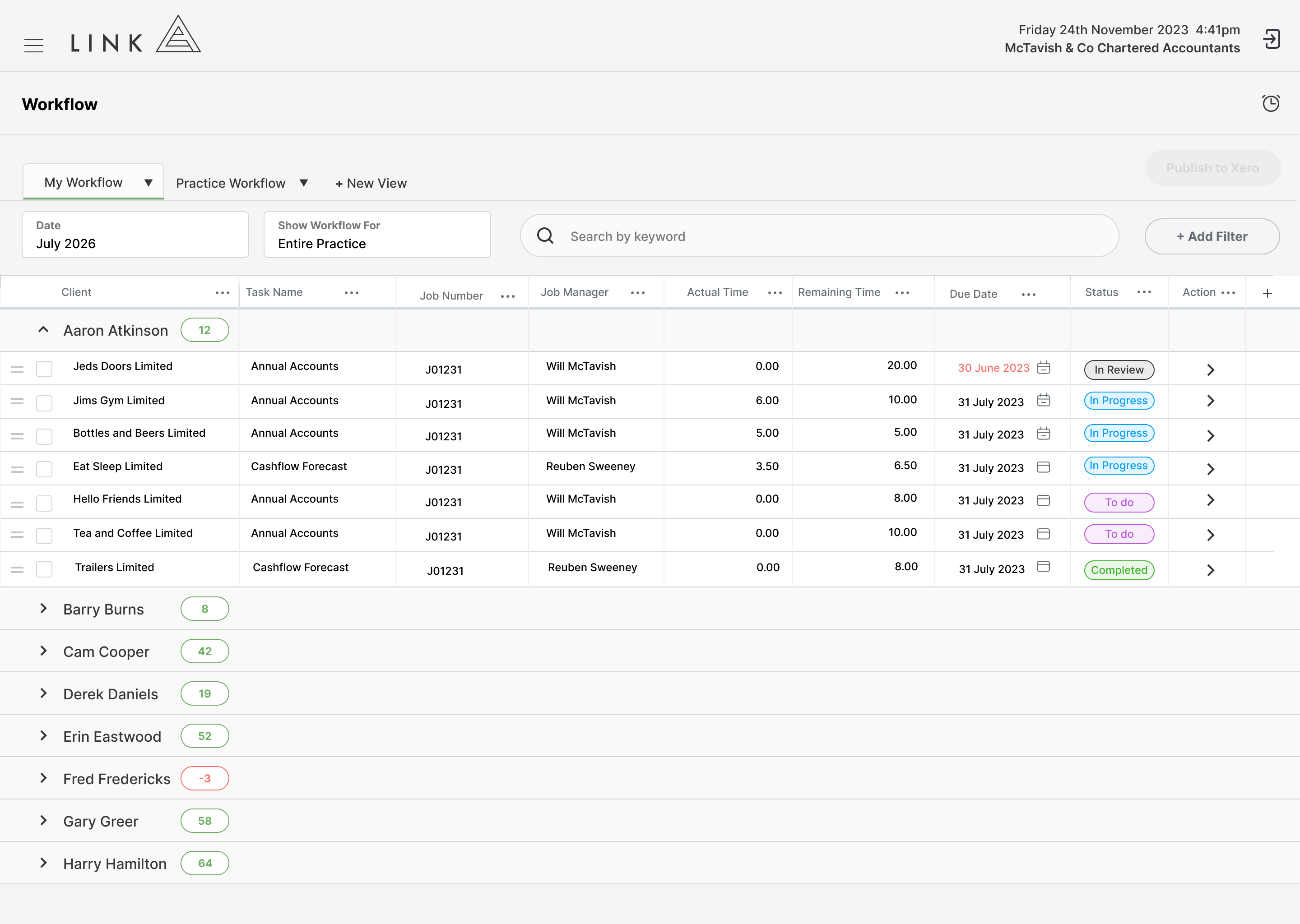
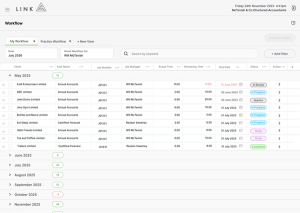
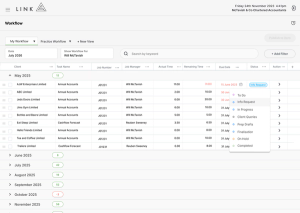
Capacity Driven Workflow is a new way to manage work in an accounting firm. Instead of treating workflow and capacity as separate systems, Link brings them together in one connected view. Teams can drag and drop work, adjust priorities, and immediately see how those changes affect each person’s available capacity.
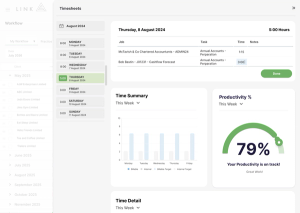
This gives firms clear visibility over who is available, who is overloaded, and where work needs to move before deadlines are missed. Rather than relying on static capacity plans or disconnected reports, capacity becomes part of the daily workflow itself. Every allocation, completion, and timesheet interaction helps keep the firm’s capacity position up to date.
Link is the only place you can get Capacity Driven Workflow because it has been built from the ground up around live capacity, structured workflow, and performance reporting. Other tools may help firms track tasks, but Link connects the work being done with the capacity available to do it, giving firms a clearer, more practical way to run their team.
1 What is Capacity Driven Workflow?
Capacity Driven Workflow is workflow management that is directly connected to team capacity. Instead of managing tasks in one place and checking capacity somewhere else, Link brings the two together so every piece of scheduled work shows its impact on the person responsible for completing it.
In practice, this means firms can plan, prioritise, and move work while seeing available capacity at the same time. Tasks can be dragged and dropped, deadlines can be adjusted, and workloads can be balanced before pressure builds. This gives managers a much clearer view of who has room, who is overloaded, and where work needs to shift.
The result is a more practical way to run an accounting firm. Capacity is no longer a separate planning exercise that quickly goes stale. It becomes part of the daily workflow, helping firms make better decisions as work moves through the practice.

Why Choose Link?
Most practice management apps treat workflow and capacity as separate problems. Work is planned in one place, capacity is checked somewhere else, and managers are left trying to balance deadlines without a clear view of who actually has room to do the work.
That gap creates real pressure inside the firm. Tasks get assigned to people who are already overloaded, deadlines creep closer without warning, and managers only realise there is a capacity problem when work is already behind. The result is missed deadlines, stressed staff, reactive decision-making, and partners constantly stepping in to keep things moving.
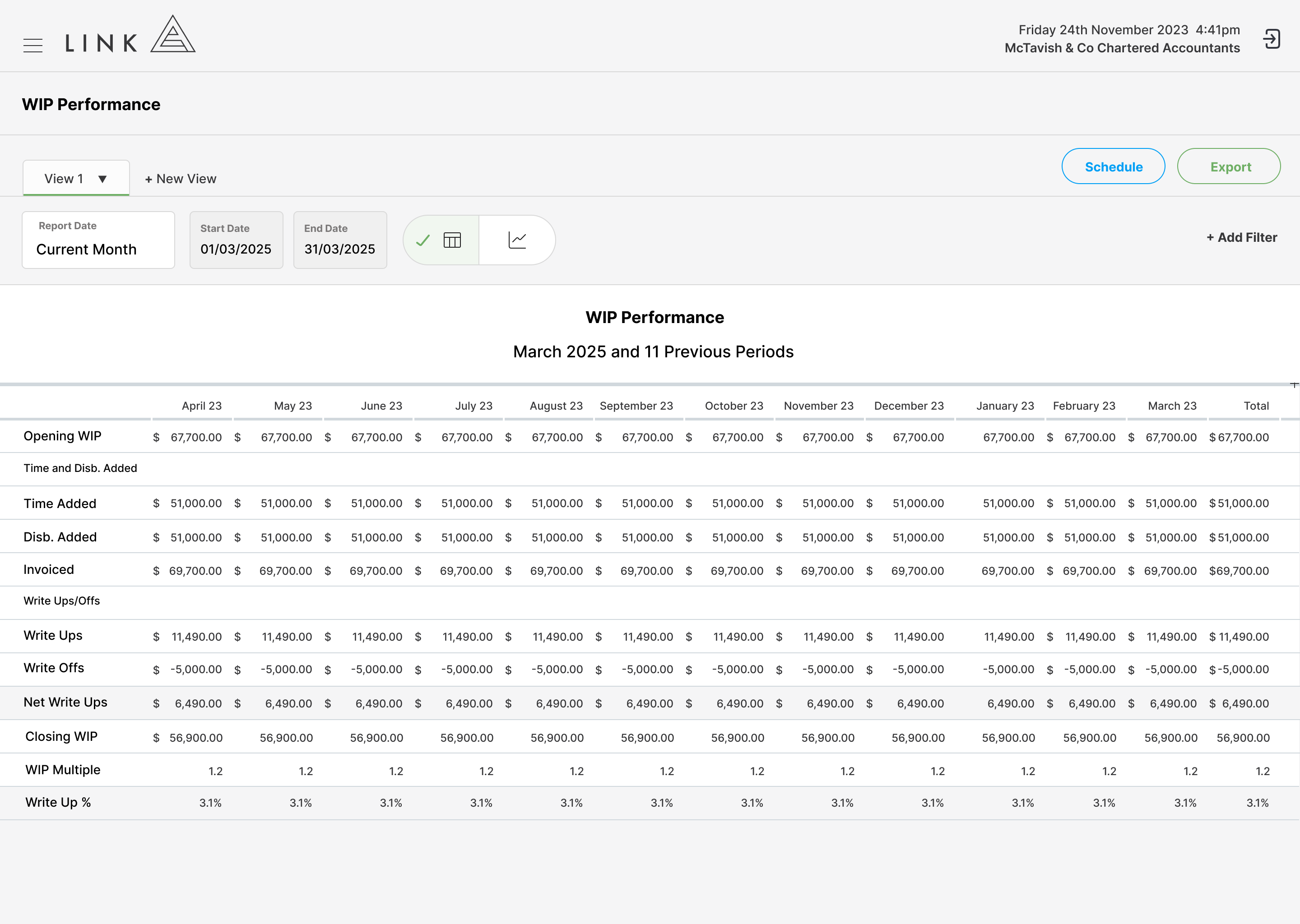
Link solves this with Capacity Driven Workflow. Your entire year of work sits in one clear, searchable view, with drag-and-drop control to prioritise tasks and move work as capacity changes. Because workflow is connected to live capacity, every decision is grounded in what your team can actually deliver, helping you protect deadlines, reduce staff pressure, and run the firm with complete clarity.
Looking at another solution?
Pump the brakes! Most systems do not have real capacity. They show a static plan of assigned work or a basic workload chart, but because those plans are not live, they are outdated as soon as work changes. Here are five ways to test the accuracy and functionality of any capacity management system.
LINK
Capacity is always live and adjusts with every interaction Tasks completed under budget increase available capacity Task overruns reduce available capacity for the month Leave reduces available capacity relative to target capacity Time added to unallocated tasks reduces available capacity Time added to future tasks adjusts capacity in relevant months
Other Solutions
Capacity is a static report and requires manual updates Tasks completed under budget do not update capacity Task overruns do not update capacity Leave does not update capacity Time added to unallocated tasks does not update capacity Time added to future tasks does not update capacity
Customer Stories
Link simplifies practice management for high-performance accounting firms by not half-solving problems.
Select the customer below to hear their story.
Emma Kenny, Director“The goals we set for lifestyle balance, early job filing and workflow efficiencies have come to fruition. The team hit 90% completion with 3+ months to spare and was fully filed a month before fiscal-year-end. This meant the team earned paid time off on Fridays from Jan–March… there was no EOFY rush.”

Phoebe Meares, Head of Operations“You can get the visibility you need quickly and make impactful decisions in a fast-paced environment.”

Daniel Britten, Director“Automated reporting, clearer visibility and an easier way to keep the team informed without adding administrative overhead.”

Adam Bird, Director“Link has helped with our pricing of our fixed fees, as we have a clearer idea of what is involved and where the leakages are.”
See for Yourself
Explore how Link delivers Work in Progress reporting in a live, self-guided demo.